Relationship Anxiety
Why Do Relationships Make Me Anxious?
Understanding why emotional closeness can trigger anxiety, what attachment patterns have to do with it, and how relationships can start to feel safer over time.
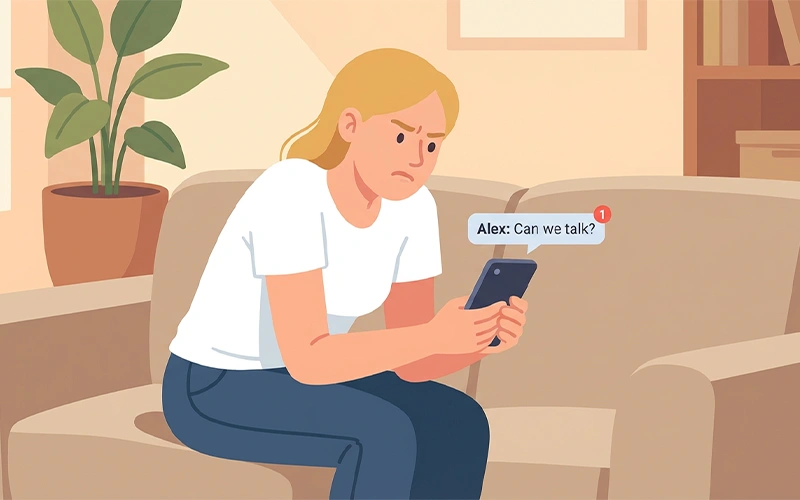
If you have ever asked yourself, "Why do relationships make me anxious?", you are far from alone.
Many people feel calm, independent, and emotionally steady on their own, then notice something shifts once a relationship becomes more real. You may start overthinking messages, fearing rejection, needing reassurance, or feeling overwhelmed by closeness.
Relationships often make people anxious because emotional connection activates vulnerability, uncertainty, and old attachment patterns. In many cases, the anxiety is not only about the current relationship. It is also about what closeness has come to mean inside your nervous system.
That does not automatically mean you are with the wrong person. Sometimes it means intimacy is bringing deeper fears to the surface: fear of abandonment, fear of losing yourself, fear of being too much, or fear of getting hurt.
In this guide, you will learn why relationships can trigger anxiety, what relationship anxiety usually feels like, how attachment styles influence it, and what actually helps over time.
Quick Answer
Why do relationships make me anxious?
Relationships can make you anxious because emotional closeness activates uncertainty, vulnerability, and attachment wounds. You may fear rejection, abandonment, dependence, or emotional exposure, even when the relationship itself is not unsafe.
What Relationship Anxiety Can Feel Like
Relationship anxiety does not always look like panic. Often, it shows up in quieter and more repetitive ways.
You might notice:
- overthinking texts, tone, or timing
- feeling uneasy when someone gets emotionally close
- needing reassurance more often than you want to admit
- worrying that you are too much, too needy, or too sensitive
- feeling calmer alone than in a relationship
- becoming hyperaware of small shifts in someone's behavior
- fearing abandonment even when nothing is clearly wrong
- feeling anxious when things are actually going well
For many people, relationships make them anxious not because something is wrong right now, but because closeness activates old emotional expectations.
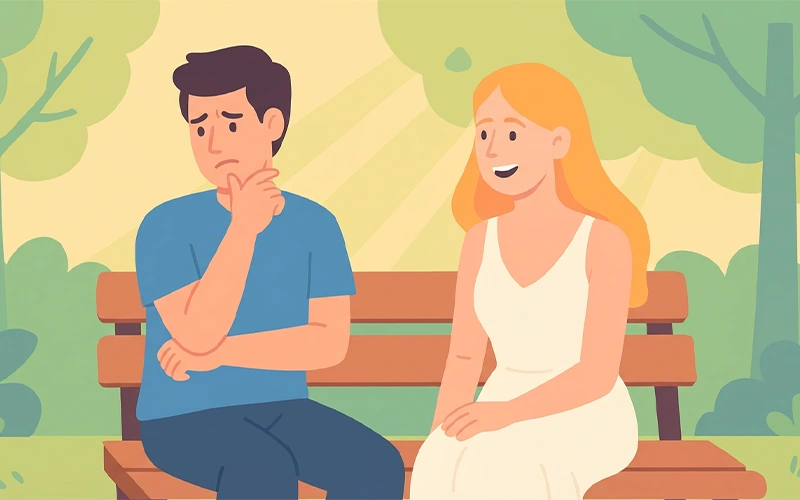
9 Common Reasons Relationships Make You Anxious
1. Emotional closeness activates vulnerability
Relationships ask you to be seen emotionally. That can bring up fear, uncertainty, and exposure, especially if vulnerability has not always felt safe in your life.
2. You may have an anxious attachment pattern
One of the most common reasons relationships make people anxious is anxious attachment. This can show up as fear of abandonment, hypervigilance, emotional overfocus, and a strong need for reassurance.
3. You may fear losing yourself in the relationship
Not all relationship anxiety is about being left. Some of it is about feeling emotionally consumed, controlled, or swallowed by the relationship. This is especially common in avoidant or fearful-avoidant patterns.
4. Past experiences created emotional memory
Even when a current partner is safe, your nervous system may still remember previous hurt. Past breakups, inconsistency, betrayal, or emotional neglect can make intimacy feel risky again.
5. Uncertainty can be hard for the nervous system
Relationships often involve waiting, ambiguity, emotional risk, and things you cannot fully control. If uncertainty feels especially difficult for you, closeness may quickly turn into anxiety.
6. You may overinterpret small changes
When someone matters to you, small shifts can feel large. A delayed text, a quieter tone, or a change in routine can trigger fear and mental spiraling.
7. Stability can feel unfamiliar
Many people assume anxiety only shows up in unhealthy relationships. But sometimes healthy relationships feel anxiety-provoking precisely because consistency and emotional safety are unfamiliar.
8. Intimacy increases the emotional stakes
The closer you feel, the more there is to lose. As feelings deepen, anxiety may increase simply because the connection matters more.
9. Your attachment system may mistake closeness for danger
Sometimes the body reacts before the mind has time to evaluate reality. Even when part of you wants love, another part may experience intimacy as a threat.
How Attachment Styles Influence Relationship Anxiety
Attachment style is one of the clearest explanations for why relationships make some people feel so emotionally intense.
Anxious attachment
People with anxious attachment often fear abandonment, read deeply into mixed signals, and feel especially sensitive to emotional distance.
Avoidant attachment
Avoidant attachment can also create relationship anxiety, but it often shows up as anxiety around closeness, neediness, expectations, or losing independence.
Fearful-avoidant attachment
Fearful-avoidant attachment often creates the most confusing mix: wanting closeness deeply, then feeling afraid of it once it arrives.
If you notice recurring patterns across multiple relationships, it may help to explore your attachment pattern with an Attachment Style Quiz.

Why Relationships Can Feel More Anxiety-Provoking Than Being Alone
Many people feel surprisingly calm on their own, then become more anxious when dating or emotionally attached.
That happens because relationships activate needs that solitude does not:
- the need to trust
- the need to be known
- the possibility of rejection
- the fear of loss
- the risk of emotional dependence
Being alone may feel simpler because nothing is being triggered. Relationships bring your deeper expectations about love, safety, and belonging into active experience.
Why Anxiety Sometimes Gets Worse When Things Are Going Well
This is one of the most confusing parts of relationship anxiety.
You might assume anxiety should increase when the relationship is unstable. But many people notice the opposite: anxiety rises when things start to feel good, calm, or emotionally real.
That often happens because safety allows deeper fears to surface. A stable relationship may challenge old beliefs like:
- love is unpredictable
- closeness always ends badly
- I will be left if I need too much
- calm means something bad is about to happen
So if you have wondered why relationships make you anxious even when things are going well, the answer may be that stability itself feels unfamiliar.
Is Relationship Anxiety a Sign You Are With the Wrong Person?
Not necessarily.
Relationship anxiety can happen in healthy, unhealthy, or mixed relationships. Anxiety alone does not prove that someone is wrong for you.
The more important question is whether the relationship itself is:
- emotionally respectful
- reasonably consistent
- open to communication
- able to repair conflict
- safe enough for your nervous system to gradually settle
Sometimes anxiety comes mostly from your internal pattern. Other times, the relationship really is unstable or emotionally unavailable. Often, it is a mix of both.
Signs the Anxiety May Be About the Dynamic Itself
While not all anxiety means the relationship is wrong, some patterns are important to take seriously.
Pay attention if:
- you feel chronically confused
- reassurance never lasts
- the other person is highly inconsistent
- closeness is repeatedly followed by withdrawal
- your needs are minimized or mocked
- communication leaves you feeling less safe, not more
If that sounds familiar, this may connect with patterns explored in Why Do Avoidants Pull Away? and Why Do Avoidants Need Space?.
What Relationship Anxiety Often Makes People Do
When relationships make you anxious, the behaviors that follow can accidentally intensify the cycle.
You may find yourself:
- asking for reassurance often
- rereading messages
- checking for changes in tone
- overthinking future outcomes
- testing the other person's feelings
- pulling away to calm down
- feeling uneasy during periods of peace
- trying to get certainty immediately
These responses make sense. They are attempts to feel safer. But over time, they often keep the nervous system activated.
What Actually Helps Relationship Anxiety Over Time
1. Understanding your attachment pattern
Awareness reduces confusion and self-blame. When you understand your pattern, your reactions start to make more sense.
2. Learning nervous system regulation
Relationship anxiety lives in the body as much as the mind. Grounding, slowing down, breathing, and pausing before reacting can all help lower intensity.
3. Separating past fear from present reality
A useful question is: "Is this fear about what is happening now, or what I learned to expect before?"
4. Building tolerance for healthy closeness
Calm and consistency can feel strange at first. Discomfort does not always mean danger. Sometimes it means your system is adjusting to something healthier.
5. Asking for clarity instead of spiraling alone
When possible, grounded communication is more helpful than silent overanalysis.
6. Choosing relationships that support regulation
A relationship will not heal everything, but stable and respectful dynamics make growth much easier than chaos does.
If anxious attachment feels especially familiar, you may also want to read How to Heal Anxious Attachment.
Can Relationship Anxiety Change?
Yes.
If relationships make you anxious, it does not mean you are broken, too sensitive, or incapable of healthy love. It usually means your nervous system learned to protect you in ways that once made sense.
With awareness, emotional regulation, better boundaries, and healthier relational experiences, relationship anxiety often becomes more manageable and less dominant over time.
The goal is not to become emotionless. The goal is to feel safer, steadier, and more grounded in connection.
Ready to Understand Your Patterns?
If relationship anxiety feels familiar, your attachment style may be shaping how you experience closeness, uncertainty, and emotional safety.
Understanding your pattern can help you respond with more clarity, less self-blame, and healthier relationship choices.
Take the Free Attachment Style QuizDiscover what is driving your relationship anxiety and how to move toward more secure connection.
FAQ
Related Reading
You may also find these helpful:
Final Thoughts
If you keep asking, "Why do relationships make me anxious?", the answer usually has less to do with weakness and more to do with how your nervous system learned to handle closeness.
Relationships can trigger fear of abandonment, vulnerability, dependence, uncertainty, and old emotional memory. But these patterns are not fixed.
With the right insight and support, connection can begin to feel less threatening and more stable over time.