Attachment Style Guide
The 4 Attachment Styles Explained
A clear guide to the four main attachment styles, how they shape relationships, and how to understand your own pattern more clearly.
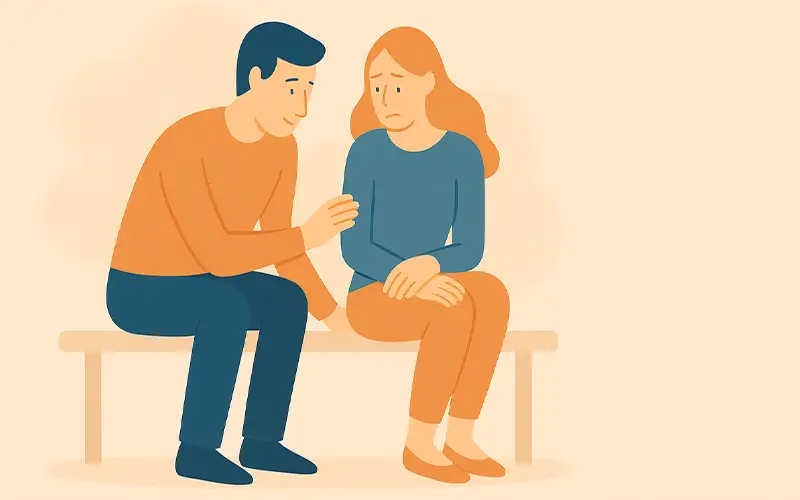
Understanding your attachment style can change the way you see relationships.
Attachment styles are the emotional patterns we develop around closeness, trust, vulnerability, and connection. These patterns often begin in early relationships, but they continue to shape how we date, bond, communicate, and respond to intimacy as adults.
If you have ever wondered why you fear abandonment, pull away when things get close, feel anxious after a good date, or struggle to trust stable love, attachment theory offers a useful framework for making sense of those patterns.
There are four main attachment styles: secure, anxious-preoccupied, dismissive-avoidant, and fearful-avoidant. Each one influences relationships in different ways.
In this guide, you will learn what the 4 attachment styles are, how each one tends to show up in relationships, and how to begin identifying your own attachment pattern.
The four attachment styles commonly discussed in adult relationships are secure, anxious-preoccupied, dismissive-avoidant, and fearful-avoidant. They describe recurring patterns in how people experience closeness, trust, independence, reassurance, vulnerability, and conflict.
Attachment patterns are not fixed identities, and people may show different tendencies across relationships or over time.
Quick Answer
What are the 4 attachment styles?
The 4 attachment styles commonly discussed in adult relationships are secure, anxious-preoccupied, dismissive-avoidant, and fearful-avoidant. Secure attachment tends to feel comfortable with closeness and independence; anxious attachment fears disconnection; dismissive-avoidant attachment protects through distance; and fearful-avoidant attachment often wants closeness while also fearing it.
Four Core Attachment Style Profiles
| Attachment Style | Closeness | Common Fear | When Triggered | Typical Relationship Pattern |
|---|---|---|---|---|
| Secure | Comfortable with closeness and independence | Usually less driven by abandonment or engulfment fears | Communicates, regulates, and seeks repair | Steadier trust, boundaries, and connection |
| Anxious-Preoccupied | Strong desire for closeness and reassurance | Abandonment or rejection | May pursue, overthink, or seek reassurance | Hypervigilance around distance and inconsistency |
| Dismissive-Avoidant | Values independence and may limit emotional dependence | Loss of autonomy, pressure, or vulnerability | May distance, shut down, or minimize needs | Withdrawal as intimacy increases |
| Fearful-Avoidant | Wants connection but may also fear it | Both abandonment and emotional vulnerability | May move toward and away from closeness | Push-pull or hot-and-cold dynamics |
Why Attachment Styles Matter
Attachment styles help explain why love can feel calm and steady for some people, but anxious, confusing, or overwhelming for others.
Your attachment style can shape:
- how safe closeness feels
- how you respond to distance or conflict
- how easily you trust others
- how you communicate needs
- how you handle vulnerability
- what kinds of relationship dynamics feel familiar
Understanding your attachment style is not about labeling yourself permanently. It is about recognizing patterns so you can relate more consciously and build healthier connections over time.
The 4 Attachment Styles at a Glance
1. Secure Attachment
People with secure attachment generally feel comfortable with both closeness and independence. They tend to trust others more easily, communicate more directly, and stay more grounded in relationships.
Common traits of secure attachment:
- comfort with intimacy
- healthy independence
- clearer communication
- stronger emotional regulation
- less fear around normal distance
Read more: Secure Attachment Style
2. Anxious-Preoccupied Attachment
People with anxious-preoccupied attachment often crave closeness but fear abandonment. They may become highly sensitive to distance, uncertainty, or mixed signals in relationships.
Common traits of anxious attachment:
- fear of being left
- reassurance-seeking
- emotional hypervigilance
- overthinking texts and tone
- difficulty calming down when connection feels uncertain
Read more: Anxious Preoccupied Attachment Style
3. Dismissive-Avoidant Attachment
People with dismissive-avoidant attachment tend to value independence strongly and may feel uncomfortable with emotional dependence or too much closeness. They often cope by distancing themselves.
Common traits of dismissive-avoidant attachment:
- strong self-reliance
- discomfort with vulnerability
- emotional distance
- pulling away when intimacy deepens
- minimizing attachment needs
Read more: Dismissive Avoidant Attachment Style
4. Fearful-Avoidant Attachment
People with fearful-avoidant attachment often want closeness deeply but also fear it. This style can create a push-pull dynamic where love feels both desired and dangerous.
Common traits of fearful-avoidant attachment:
- craving connection and fearing it
- hot-and-cold behavior
- mistrust in relationships
- emotional overwhelm
- fear of both abandonment and engulfment
Read more: Fearful Avoidant Attachment Style
Related context: Disorganized Attachment in Relationships
Core style guide: Disorganized Attachment Style
How Attachment Styles Affect Relationships
Attachment styles shape more than attraction. They influence the emotional rhythm of a relationship.
They can affect:
- how quickly you attach
- how you react when someone pulls away
- how you handle conflict
- whether closeness feels calming or threatening
- whether consistency feels comforting or unfamiliar
- what kinds of partners feel magnetic to you
For example:
- a secure person may handle conflict with more steadiness
- an anxious person may fear abandonment and seek reassurance
- a dismissive-avoidant person may need distance when intimacy rises
- a fearful-avoidant person may swing between wanting closeness and withdrawing from it
This is why attachment theory is so useful: it helps explain patterns that might otherwise just feel confusing or personal.
Attachment style is one framework for understanding relationship patterns; it does not explain every behavior or determine the outcome of a relationship.
How Attachment Styles Show Up in Adult Relationships
Secure
Closeness and independence can coexist.
Anxious
Distance may activate fear and reassurance-seeking.
Dismissive-Avoidant
Closeness may activate withdrawal or a stronger need for autonomy.
Fearful-Avoidant
Both closeness and distance may activate fear, creating push-pull responses.
For focused relationship context, explore Anxious Attachment in Relationships, Avoidant Attachment in Relationships, and Fearful-Avoidant vs Dismissive-Avoidant.
You can also compare secure patterns through Signs of Secure Attachment.
How Different Attachment Styles May React to the Same Situation
A partner takes longer than usual to reply
- Secure: Usually considers multiple explanations before assuming rejection.
- Anxious: May worry the connection is changing.
- Dismissive-Avoidant: May not feel urgency and may appreciate the space.
- Fearful-Avoidant: May fear rejection but also hesitate to reach out.
A relationship becomes emotionally closer
- Secure: Generally tolerates increased intimacy.
- Anxious: May want even more reassurance and certainty.
- Dismissive-Avoidant: May feel pressure or need more space.
- Fearful-Avoidant: May enjoy closeness, then become afraid of vulnerability.
Conflict happens
- Secure: More likely to seek repair.
- Anxious: May urgently seek reassurance or resolution.
- Dismissive-Avoidant: May shut down or withdraw.
- Fearful-Avoidant: May alternate between pursuit and withdrawal.
These are possible patterns, not deterministic rules. Context, communication, and learned skills matter.

How to Identify Your Attachment Style
You may be able to recognize your attachment style by noticing what happens when relationships start to matter.
Ask yourself:
- What happens when someone becomes emotionally important to me?
- How do I react when communication changes?
- Do I seek reassurance or create distance?
- How comfortable am I depending on someone?
- What happens during conflict?
- How do I respond after vulnerability or intimacy?
- Can I ask for needs directly?
- Do I tolerate healthy independence?
You can also look at repeating patterns, such as:
- attracting emotionally unavailable partners
- overthinking relationships
- needing a lot of reassurance
- pulling away after intimacy
- feeling both drawn to and overwhelmed by love
If several of these feel familiar, your attachment style may be shaping more than you realized.
One behavior alone does not determine an attachment style. Look for recurring patterns across closeness, distance, conflict, reassurance, and repair.
Not Sure Which Attachment Style You Have?
If several patterns sound familiar, that is normal. People do not always fit neatly into one category, and relationship context can affect how attachment tendencies appear.
Start with What Attachment Style Am I? for an informational guide, or use the Attachment Style Test for a more focused explanation. The Free Attachment Style Quiz is an interactive reflection tool, not a clinical assessment.
Can Attachment Styles Change?
Yes.
Attachment patterns can be shaped by early caregiving experiences, later relationships, and repeated experiences of safety or insecurity. Patterns can shift, and people can become more secure over time.
Many adults develop what is often called earned secure attachment through:
- self-awareness
- emotional regulation
- healthier boundaries
- therapy or healing work
- more secure relationship experiences
- repeated practice with trust, communication, and repair
Helpful next steps may include Earned Secure Attachment, Secure Attachment Exercises, and How to Heal Anxious Attachment.
This matters because attachment theory is not just about understanding the past. It is also about creating healthier patterns in the present.
Which Attachment Style Is the Healthiest?
Secure attachment is generally associated with greater comfort with intimacy, independence, communication, trust, and conflict repair. It is often a useful direction for growth, but people with insecure attachment patterns are not unhealthy or incapable of good relationships.
It is commonly associated with:
- trust
- emotional openness
- balanced independence
- healthier conflict repair
- less fear-driven relationship behavior
But the goal is not to shame insecure attachment patterns. The goal is to understand them, work with them, and move toward greater security over time.
People with anxious, dismissive-avoidant, or fearful-avoidant attachment can all become much more secure through healing and awareness.
Where to Start If You Want to Understand Yourself Better
If you are new to attachment theory, the best next step is usually:
- identify your dominant attachment pattern
- learn how it tends to show up in relationships
- notice your recurring triggers and behaviors
- start building more secure ways of relating
For many people, that begins with a quiz or style guide, then moves into more focused pages like:
- Anxious Preoccupied Attachment Style
- Dismissive Avoidant Attachment Style
- Fearful Avoidant Attachment Style
- Secure Attachment Style
- How to Heal Anxious Attachment
That gives this hub page a clearer purpose than the current broader "science + contexts + books + resources" structure.
Moving Toward More Secure Relationships
No matter which of the 4 attachment styles fits you best right now, your current pattern is not your final destination.
Attachment styles can become more secure through repeated experiences of:
- emotional safety
- clearer communication
- better self-awareness
- stronger regulation
- healthier relational choices
The point of learning about attachment is not to box yourself in. It is to give yourself language, clarity, and a path forward.
Explore Each Attachment Style
Secure Attachment
Comfort with closeness, trust, independence, and repair.
Explore Secure AttachmentAnxious Attachment
Fear of abandonment, reassurance-seeking, and sensitivity to distance.
Explore Anxious AttachmentDismissive-Avoidant Attachment
Strong independence, emotional distance, and discomfort with dependence.
Explore Dismissive-Avoidant AttachmentFearful-Avoidant Attachment
Wanting closeness while also fearing vulnerability and loss.
Explore Fearful-Avoidant AttachmentWant to Discover Your Attachment Style?
If you are not sure whether you lean secure, anxious, dismissive-avoidant, or fearful-avoidant, the free quiz can help you reflect on how you respond to closeness, distance, reassurance, and conflict.
Take the Free Attachment Style QuizNo email required. No sign-up needed.
FAQ
Related Reading
You may also find these helpful:
Final Thoughts
If you are learning about the 4 attachment styles, the most important thing to remember is that these patterns are not judgments. They are explanations.
They help make sense of why relationships may feel steady, anxious, distant, or confusing. And once you understand the pattern, you are in a much better position to change it.
Understanding attachment is not the end of the process. It is the beginning of more conscious, secure, and healthier relationships.