Why Do Avoidants Pull Away?
Understanding why closeness can suddenly create distance in avoidant attachment.
Avoidants often pull away when closeness feels overwhelming, vulnerable, or too emotionally demanding.

Intro
You may have noticed a confusing pattern: just when a relationship starts to feel warmer, closer, or more emotionally meaningful, the avoidant partner seems to pull away. Messages slow down. Openness fades. Plans become less certain.
In many cases, this distance is not a conscious rejection. It is a protective response to emotional overwhelm, fear of dependence, and discomfort with vulnerability.
In this guide, you will learn what pulling away can look like, the most common reasons behind it, whether it means loss of interest, and what to do next.
Quick Answer
Why do avoidants pull away?
Avoidants tend to pull away when emotional closeness starts to feel overwhelming, demanding, or unsafe. Distance helps them reduce internal stress, restore a sense of independence, and avoid feelings they do not yet know how to handle comfortably.
What Pulling Away Can Look Like
If you are wondering whether an avoidant partner is distancing, these are some common signs:
They text less often or take much longer to reply.
They stop initiating contact and wait for you to reach out first.
They avoid deeper conversations and keep things surface-level.
They become warmer, then suddenly distant after closeness.
They shift focus to work, hobbies, or solo routines.
They seem emotionally flat after an intimate moment.
They pull back right after a good date or vulnerable conversation.
These patterns can feel sudden from the outside, even when internal discomfort has been building for a while.
7 Common Reasons Avoidants Pull Away
These are the most common reasons avoidants pull away when a relationship starts to feel closer.
1. Closeness makes them feel vulnerable
For many avoidants, being emotionally close means being deeply seen. That can activate discomfort, fear, or shame. Pulling away becomes a way to reduce that exposure.
2. They fear losing independence
Avoidants often value autonomy strongly. As connection deepens, they may worry that closeness will lead to pressure, dependence, or loss of self.
3. Emotional intimacy feels overwhelming
They may care about you and still feel overloaded by intensity. Without strong regulation tools, distance can feel easier than staying present.
4. They feel pressure or expectations
Even healthy relationship needs can feel heavy to someone with avoidant patterns. Communication and planning may be experienced as pressure instead of connection.
5. Conflict makes them shut down
When tension appears, avoidants often cope by withdrawing rather than processing together. Distance can become an escape from emotional flooding or criticism.
6. They struggle to express what they feel
Some avoidants are not fully aware of what is happening internally in the moment. Instead of naming fear or overwhelm, they become vague or silent.
7. Their attachment system becomes activated
What looks like sudden loss of interest is often an attachment response. As the bond matters more, deeper fears around closeness and reliance can activate.
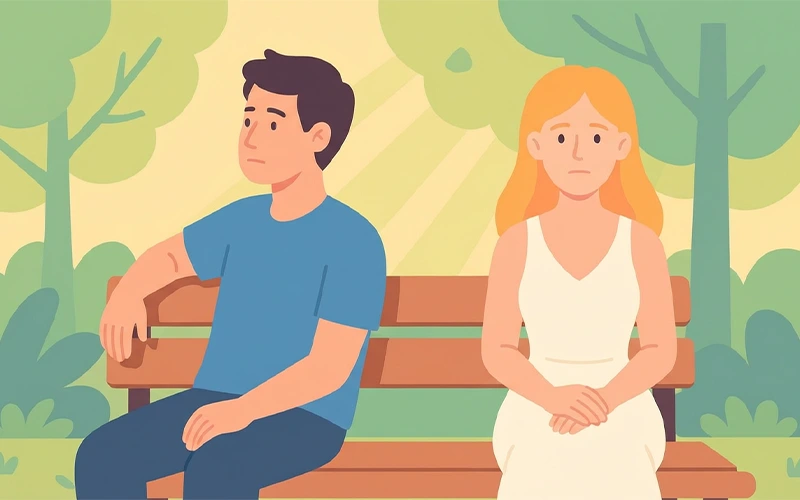
Does Pulling Away Mean They Lost Interest?
Not necessarily.
Avoidants can pull away even when they genuinely care. In many cases, distance is less about the partner and more about how closeness feels inside their nervous system. The stronger the emotional bond becomes, the more uncomfortable vulnerability may feel.
That said, not every case of pulling away should be romanticized. Sometimes distance reflects uncertainty, low readiness, or limited capacity for a healthy relationship. The key is to look at the pattern, not just the explanation.
Pulling Away Is:
- Often a self-protective response
- Commonly linked to emotional regulation
- Sometimes unconscious
- About internal discomfort with closeness
- A pattern that can repeat without awareness and effort
Pulling Away Is Not:
- Always proof they do not care
- Automatically your fault
- Always a deliberate manipulation
- A sign that you are too much
- A guarantee that the relationship is over
What to Do When an Avoidant Pulls Away
Do not personalize the silence too quickly
Their withdrawal often reflects internal stress, not your worth as a partner.
Caution: Do not use this idea to excuse endless inconsistency.
Avoid chasing or escalating immediately
Repeated pressure can increase their urge to retreat. Calm space usually works better.
Caution: Space should be intentional, not emotional self-abandonment.
Stay grounded in your own routine
Returning to your habits and support system helps regulate your own nervous system.
Caution: Do not pause your life while waiting for someone to reappear.
Look for patterns, not promises
Behavioral consistency matters more than short-term reassurance.
Caution: Repeated cycles without repair are important data, not a small detail.
Communicate clearly when there is space to talk
Clear, calm communication gives both people a chance to reset expectations.
Caution: If clarity never arrives, treat that as a meaningful answer.
Protect your emotional boundaries
Compassion and boundaries can exist together in healthy relationships.
Caution: Understanding attachment should not mean accepting chronic uncertainty.
Healthy Space vs. Unhealthy Distance
Healthy space
- Temporary and respectful
- Communicated clearly
- Followed by reconnection
- Does not leave you chronically confused
- Supports both people's nervous systems
Unhealthy distance
- Repeated silence with no repair
- Emotional unavailability as a pattern
- Vague communication that keeps you hanging
- Closeness followed by disappearance again and again
- A dynamic where your needs are constantly minimized
Healthy distance allows room to breathe, not room to disappear.

Healthy distance allows room to breathe, not room to disappear.
When Pulling Away Becomes a Bigger Problem
Occasional withdrawal is one thing. Chronic distance is something else.
If you regularly feel anxious, confused, emotionally deprived, or afraid to ask for basic consistency, that is important information. Even if the pattern comes from avoidant attachment, your needs for safety, clarity, and connection still matter.
You do not have to label someone as bad to decide a dynamic is not healthy for you.
Decode Your Attachment Dynamic
Understand how you respond to closeness, distance, and emotional uncertainty.
Take the QuizTake the Attachment Style QuizGet a clearer view of your relationship patterns.
Related reads: Why Do Avoidants Come Back? · Why Do Avoidants Need Space? · Signs an Avoidant Loves You But Is Scared · Why Do Avoidants Lose Interest Suddenly?
FAQ
Next Best Steps
Healing next steps
How to Heal Anxious Attachment
Build emotional clarity and boundaries you can actually hold.