Attachment Style Guide
Dismissive Avoidant Attachment Style
What dismissive avoidant attachment looks like, why it develops, how it affects relationships, and what helps you move toward secure attachment.

If you tend to value independence strongly, feel uncomfortable with emotional dependence, or pull away when relationships get too close, you may relate to dismissive avoidant attachment style.
This attachment style is usually marked by emotional distance, self-reliance, and discomfort with vulnerability. You may care about people and still struggle to stay open, emotionally available, or deeply connected when closeness starts to feel intense.
Dismissive avoidant attachment does not mean you are incapable of love or connection. It usually means your nervous system learned that relying on others felt unsafe, unhelpful, or emotionally costly.
In this guide, you will learn what dismissive avoidant attachment style is, how it shows up in relationships, what causes it, and what helps you become more secure over time.
Quick Answer
What is dismissive avoidant attachment style?
Dismissive avoidant attachment style is an insecure attachment pattern marked by strong self-reliance, discomfort with emotional closeness, and a tendency to minimize attachment needs. People with this style often value independence highly but may struggle with vulnerability, emotional intimacy, and consistent closeness in relationships.
Core Traits of Dismissive Avoidant Attachment
People with dismissive avoidant attachment often share these patterns:
- they value independence and autonomy very strongly
- they feel uncomfortable with too much emotional closeness
- they tend to suppress or minimize their own attachment needs
- they may appear emotionally distant or hard to read
- they often prefer self-reliance over depending on others
- they may feel overwhelmed when relationships become more emotionally demanding
These patterns are not random personality flaws. They are attachment strategies shaped by earlier emotional experiences.

What Dismissive Avoidant Attachment Looks Like in Relationships
In adult relationships, dismissive avoidant attachment often shows up as:
- needing a lot of space when closeness increases
- withdrawing during emotional conversations
- difficulty expressing deeper feelings
- feeling pressured by other people's needs or expectations
- becoming more distant when a relationship becomes serious
- focusing on independence, work, or routines over emotional intimacy
This can make relationships feel confusing, especially for partners who want more emotional openness or consistency.
10 Common Signs of Dismissive Avoidant Attachment
1. You strongly value independence
One of the clearest signs is a strong preference for handling things alone and not relying too much on other people.
2. You feel uncomfortable with emotional dependence
You may feel uneasy when someone needs a lot of closeness, reassurance, or emotional availability from you.
3. You pull away when relationships get too close
As intimacy deepens, you may start needing more distance, more space, or more emotional separation.
4. You suppress your own emotional needs
Instead of noticing and expressing your needs, you may minimize them or act as if you do not really need much from anyone.
5. You struggle with vulnerability
Sharing deeper feelings, fears, or needs can feel unnatural, uncomfortable, or too exposing.
6. You may seem emotionally distant
Others may experience you as detached, hard to read, or less emotionally responsive than they hoped.
7. You focus on flaws to create distance
When closeness feels uncomfortable, you may start noticing a partner's shortcomings more intensely or mentally downplay the relationship.
8. Conflict makes you shut down
Rather than leaning into emotional repair, you may withdraw, become highly logical, or want to end the conversation quickly.
9. You equate closeness with pressure
Even healthy relationship needs can sometimes feel heavy, intrusive, or overwhelming.
10. You feel safer when you are not emotionally exposed
At the core, dismissive avoidant attachment often feels like this:
"I feel safest when I do not need too much from anyone."
Dismissive Avoidant vs. Other Attachment Styles
It helps to understand how this style differs from the others.
Secure attachment
Securely attached people are generally comfortable with both closeness and independence. They can stay connected without feeling trapped.
Anxious preoccupied attachment
Anxiously attached people usually fear abandonment and seek more reassurance, while dismissive avoidant people tend to feel overwhelmed by too much closeness.
Fearful-avoidant attachment
Fearful-avoidant people often want closeness but also fear it deeply, creating a more conflicted push-pull pattern. Dismissive avoidant attachment is usually more consistently organized around distance and self-protection.
Dismissive avoidant attachment
Dismissive avoidant attachment is more strongly centered on independence, emotional suppression, and discomfort with relying on others.
This is why the pattern often feels calm on the outside but more defended underneath.
What Causes Dismissive Avoidant Attachment?
Dismissive avoidant attachment usually develops through emotional unavailability, rejection of emotional needs, or early environments that rewarded self-sufficiency over closeness.
This can happen when caregivers were:
- emotionally distant or unavailable
- uncomfortable with vulnerability
- rejecting of emotional expression
- more responsive to achievement than to feelings
- inconsistent in providing emotional comfort
These experiences can teach a child beliefs like:
- I should not need too much from others
- It is safer to rely on myself
- Emotions create problems
- Closeness leads to pressure or disappointment
As an adult, those early emotional lessons may continue to shape relationships.
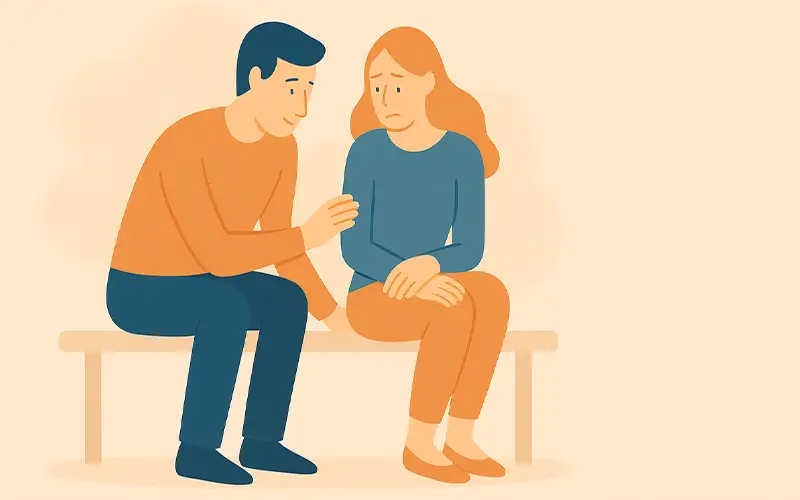
Why It Feels Safer to Stay Distant
Dismissive avoidant attachment is not just a mindset. It is also a nervous system pattern.
Your body may learn to associate:
- independence with safety
- closeness with pressure
- vulnerability with risk
- emotional need with discomfort
- distance with relief
That is why emotional withdrawal can feel so automatic. Even when part of you wants connection, another part may react as if closeness costs too much.
Understanding this helps reduce shame. It shifts the question from "Why am I so distant?" to "What is my system protecting me from?"
How It Affects Adult Relationships
Dismissive avoidant attachment can create recurring patterns such as:
- ending relationships when they feel too serious
- feeling overwhelmed by emotional demands
- struggling to communicate vulnerability
- creating distance after intimacy
- preferring partners who need less emotionally
- feeling lonely while also resisting closeness
This is part of why people with this style may repeatedly get caught in avoidant-anxious dynamics. If that feels familiar, pages like Why Do Avoidants Pull Away? and Why Do Avoidants Need Space? are natural next reads for this cluster.
Can Dismissive Avoidant Attachment Be Healed?
Yes.
Attachment styles are not fixed. Dismissive avoidant attachment can become much more secure over time through:
- self-awareness
- emotional literacy
- nervous system regulation
- gradual vulnerability
- healthier relationship experiences
- learning that closeness does not have to erase independence
Healing does not mean becoming highly dependent or emotionally flooded. It means learning that connection and autonomy can coexist.
How to Start Becoming More Secure
Notice your distancing patterns
Pay attention to what makes you shut down, withdraw, or mentally deactivate the relationship.
Build emotional awareness
Practice identifying what you actually feel before moving straight into avoidance, logic, or numbness.
Take small risks with vulnerability
You do not need to force huge emotional exposure. Start with honest, manageable self-disclosure.
Learn to communicate your need for space clearly
Needing space is not the problem. The goal is to express it in a way that does not create confusion or emotional abandonment.
Challenge beliefs about dependence
Healthy connection is not the same as losing yourself. Interdependence is different from emotional engulfment.
Choose secure closeness, not total distance
A more secure pattern allows for both boundaries and connection.
For a deeper healing path, link this page naturally to Attachment Styles Overview and How to Heal Anxious Attachment only where relevant, but this page itself should stay centered on avoidant healing.
What Secure Growth Starts to Look Like
As dismissive avoidant attachment begins to heal, you may notice:
- less automatic withdrawal
- more tolerance for emotional closeness
- clearer communication about needs and space
- more awareness of your own feelings
- less fear of relying on others
- more capacity for repair after conflict
- greater ability to stay present when intimacy deepens
Secure attachment does not mean you lose your independence. It means independence no longer requires emotional distance.
Moving Toward Secure Attachment
If you identify with dismissive avoidant attachment style, the most important thing to remember is that this pattern makes sense.
It often develops as an adaptation to emotional environments where vulnerability did not feel safe or rewarding. It is not a character flaw, and it does not mean you are incapable of deep connection.
With enough awareness, emotional practice, and safer relational experiences, closeness can begin to feel less threatening and more sustainable.
Want to Understand Your Attachment Style More Clearly?
If this pattern feels familiar, the Attachment Style Quiz can help you understand whether you lean dismissive avoidant, anxious, fearful-avoidant, or secure.
Take the Free Attachment Style QuizGet a clearer view of your attachment pattern, emotional habits, and next steps toward more secure relationships.
FAQ
Related Reading
You may also find these helpful:
Final Thoughts
If you identify with dismissive avoidant attachment style, the goal is not to become a completely different person.
The goal is to build a relationship with closeness that feels safer, more conscious, and less threatening than it once did.
You do not have to give up independence to become more secure. Real growth usually looks like learning how to stay connected without feeling trapped, overwhelmed, or emotionally shut down.