Emotional and Relationship Signs
Anxious Attachment Symptoms: Emotional and Relationship Signs
Learn how anxious attachment shows up emotionally, mentally, physically, and behaviorally, and why uncertainty can feel so overwhelming when closeness matters most.
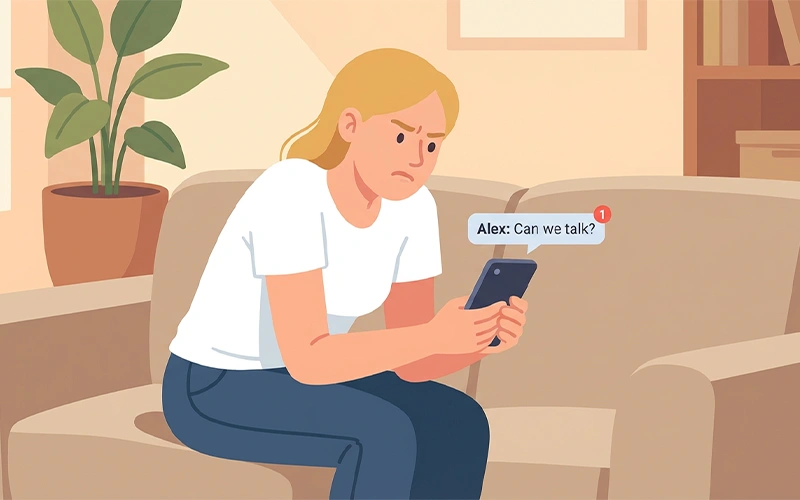
Anxious attachment symptoms can feel intense because they do not only happen in your thoughts.
They can show up in your emotions, body, behaviors, communication, and relationship patterns. You may overthink a text, feel a drop in your stomach when someone takes longer to reply, or need reassurance to feel calm.
You may know logically that a small delay does not always mean rejection, but your body may still react as if something is wrong.
This page focuses on the internal symptoms of anxious attachment: emotional, mental, physical, and behavioral. If you want the relationship-pattern version, read 15 signs of anxious attachment. If you want the root cause, read what causes anxious attachment.
Quick note: This article is for educational and self-reflection purposes. It is not a diagnosis and does not replace professional support.
Quick Answer
What are anxious attachment symptoms?
Common anxious attachment symptoms include fear of abandonment, needing frequent reassurance, overthinking texts, jealousy, physical stress, difficulty relaxing, and feeling triggered by distance or uncertainty.
Symptoms vs Signs
People often use symptoms and signs together, but they are not always the same thing.
Symptoms are what you feel inside. Signs are what other people may notice from the outside.
Internal symptoms
- fear
- panic
- jealousy
- racing thoughts
- physical tension
- emotional urgency
- difficulty calming down
Outward signs
- repeated texting
- asking for reassurance
- apologizing too much
- people-pleasing
- checking social media
- struggling to give space
- trying to fix conflict quickly
This distinction matters because anxious attachment is not only a behavior pattern. It is also an internal emotional and nervous system experience.
For the outward relationship-behavior version, read signs of anxious attachment.
Emotional Symptoms
Emotional symptoms are often the first thing people notice. You may feel calm when the relationship feels secure, but overwhelmed when connection feels uncertain.
1. Fear of abandonment
You may worry that someone will leave, lose interest, choose someone else, or suddenly stop caring. A delayed text can feel less like a delay and more like the beginning of loss.
2. Strong need for reassurance
Reassurance may feel urgent. You may need to hear that things are okay, that you are not being left, or that you still matter.
If reassurance helps only briefly, the cycle can become exhausting. A more internal skill path starts with anxious attachment self-soothing.
3. Feeling like you are too much
Many people with anxious attachment feel ashamed of their needs. You may think you ask for too much, care too much, or should be easier to love.
4. Jealousy or fear of being replaced
You may feel threatened by an ex, a friend, a coworker, or even a shift in how much attention you are getting. The deeper fear is often not jealousy itself, but the feeling of not being chosen.
5. Emotional highs and lows
When connection feels secure, you may feel peaceful, excited, and relieved. When it feels uncertain, you may feel anxious, rejected, or desperate. That contrast can make the relationship feel very intense.
Mental Symptoms
Anxious attachment also affects your thoughts. When connection feels uncertain, the mind often starts searching for answers fast.
6. Overthinking texts and tone
You may analyze response time, word choice, punctuation, emojis, length, tone, or whether they sounded different than yesterday. A small change can feel like a big signal.
7. Imagining worst-case scenarios
Your mind may jump to the most painful explanation: they are losing interest, talking to someone else, regretting the relationship, or about to leave.
If you want to understand why those moments hit so hard, read anxious attachment triggers.
8. Difficulty trusting consistency
Even when someone is reliable, your nervous system may still wait for the other shoe to drop. Consistency can feel unfamiliar when your system expects love to disappear.
9. Preoccupation with the relationship
The relationship may take up a lot of mental space. You may keep thinking about what they meant, how they feel, whether they are pulling away, or how to get reassurance.
This is one reason anxious attachment is sometimes called anxious preoccupied attachment style.
Physical Symptoms
Anxious attachment is not only emotional. It can show up in the body, especially when connection feels uncertain.
10. Tight chest, stomach drop, or racing heart
You may feel a tight chest, shallow breathing, a stomach drop, shaky energy, or restlessness. Your body may react as if disconnection is a threat.
11. Trouble sleeping or focusing
Relationship anxiety can make it hard to sleep or concentrate because your attention keeps returning to the relationship. The mind treats the connection as urgent.
12. Feeling unable to relax until you get reassurance
You may feel stuck in a waiting state until the other person responds. Reassurance can calm you briefly, but if the cycle keeps repeating, external confirmation starts to feel like the only way to settle.
Behavioral Symptoms
Behavioral symptoms are the actions you may take when anxiety is activated. These behaviors usually try to restore connection.
13. Repeated texting or checking
You may send another text, reread the conversation, check whether they are online, or look at social media for clues. It can bring short-term relief, but usually keeps the nervous system focused on the threat.
14. Apologizing too much
You may apologize for asking, caring, or bringing up a concern. Apologizing can feel safer than risk being seen as difficult or abandoned.
15. People-pleasing or hiding your needs
You may become extra agreeable, low-maintenance, or constantly available because asking for more feels risky. This can keep the connection temporarily, but often creates resentment and insecurity later.
Relationship Symptoms
Anxious attachment often becomes most visible in relationships, especially dating.
16. Feeling drawn to avoidant or inconsistent partners
Warm-then-distant behavior can be especially activating. Relief, panic, hope, confusion, and pressure to fix the connection can all show up at once.
For the dynamic on the other side, read anxious vs avoidant attachment.
17. Conflict feels like the relationship is ending
A disagreement may feel like abandonment or the end of the bond. That can lead to urgent fixing, fast apologizing, or avoiding your own anger to keep closeness intact.
18. Space feels like rejection
When someone needs space, it may land as "you are too much" or "I am being left." Healthy space is easier to tolerate when it comes with clarity, care, and a return point.
19. Feeling calm only when the relationship feels secure
Your mood may rise and fall with the relationship. When they are warm, you feel okay. When they are distant, you feel anxious. The goal is not to stop caring, but to build more inner safety.
Anxious Attachment Symptoms in Dating
Dating can activate anxious attachment strongly because early dating is naturally uncertain. You may feel triggered by slow replies, unclear intentions, inconsistent plans, or strong chemistry without consistency.
For many people, those symptoms ease when the relationship becomes clearer. For others, the uncertainty itself keeps the pattern alive.
Anxious Attachment Symptoms After a Breakup
After a breakup, symptoms may become stronger. You may replay the relationship, check their social media, wonder if they miss you, or feel physically unsettled by the distance.
Breakups are painful for many people. Anxious attachment can make the loss feel like both abandonment and identity pain at the same time.
Is It Anxious Attachment or a Real Relationship Problem?
Not every anxious feeling is just your attachment style. Sometimes anxiety is responding to real inconsistency or emotional unavailability.
If one small moment feels like proof of rejection, or reassurance helps only temporarily, that can point to anxious attachment. If someone repeatedly disappears, avoids repair, or keeps the relationship vague, that may be a real relationship problem.
Both can be true. You can have anxious attachment and still be with someone who is not emotionally safe for you.
Are Anxious Attachment Symptoms Always a Problem?
Not always. Some symptoms are signals that you care about closeness and connection. The issue is when fear takes over and creates patterns that hurt you or the relationship.
Wanting communication is healthy. Panicking when someone cannot reply immediately can become distressing. Wanting reassurance is normal. Needing constant reassurance to feel okay can become exhausting.
What Triggers Anxious Attachment Symptoms?
Common triggers include delayed replies, emotional distance, vague communication, canceled plans, inconsistent affection, conflict, silence after intimacy, avoidant behavior, and unclear relationship status.
If you want a more complete trigger map, read anxious attachment triggers.
Next Step
Want to understand your attachment pattern?
If these symptoms feel familiar, take the free quiz and compare your results with the style pages.
Related Reading
Final Thoughts
Anxious attachment symptoms are not proof that you are broken. They are often signs that your nervous system learned to watch closeness closely because closeness once felt uncertain.
With awareness, self-soothing, secure communication, and more consistent relationships, those symptoms can become less intense over time.
You can learn that uncertainty is not always abandonment, and that your needs do not make you too much.